
3 “Odd” Sleep Strategies Backed by Research (& My Results)
[Vault Insider] Not melatonin, not blue light — these underappreciated levers reshaped my sleep quality.


If you’ve already gone through my full 37-Part Circadian Mastery Protocol, you know it covers a wide range of biological inputs — from light and temperature to movement, hormones, and social rhythm cues.
What 10,000+ Hours of Lost Sleep Taught Me: Kat’s 37-Part Circadian Mastery Protocol

I missed more than 10,000 hours of sleep I should have gotten.
But this isn’t a rehash of the full list. And it’s not a ranked “best of” or a breakdown of the most evidence-based tactics either.
This post is different.
Here, I’m sharing 3 of the more unusual strategies from that 37-part protocol — not because they lack evidence (quite the opposite), but because most people don’t realize how much they can impact sleep quality.
They’re not the usual suspects like morning sunlight, circadian eating windows, pre-bed showers, or blue light blocking.
(And I assume that, like many Vault Insiders, you’ve already got those dialed in — and appreciate their role in long-term sleep stability.)
These strategies are the ones that:
Seldom appear in standard sleep recommendations
Made a clear, noticeable impact on my own sleep
Are easy or somewhat easy to implement
Are evidence backed
And have consistently worked in context — either when layered with other strategies or used to break through sleep plateaus
For each one, I’ll walk you through:
What the strategy is
How I personally applied it
And what changed in my sleep
Here are my 3 top unusual strategies from my 37-Part Circadian Mastery Protocol that have been embedded in my life for over 5 years — not because they’re trendy, but because they made a real difference in my sleep even when the hygiene basics were already dialed in.
And you can use at least one of them tonight.
Let’s get into it.
1. Frequency-Based Evening Sound Therapy
Impact Index: 7/10
Ease of Implementation: 8/10
Vault Value Score: 7.4/10
Most people think sleep and sound don’t mix.
We’re told to eliminate every noise source — fans, partners, city traffic — and aim for total silence. But certain types of sound don’t interfere with sleep — they facilitate it.
That’s because it’s not the presence of sound that matters — it’s the frequency and how your brain responds to it.
What Makes This Effective
Sound doesn’t have to stimulate.
When delivered at the right frequency, it can calm the nervous system, lower heart rate, and reinforce the body’s natural descent into sleep.
Brown noise (20–200 Hz) creates a steady, low-frequency backdrop that masks disruptive environmental noise and promotes parasympathetic tone.
Pink noise enhances slow-wave sleep and has been shown to improve memory consolidation.
Delta wave entrainment (0.5–4 Hz) may synchronize brainwaves with the natural rhythms of deep sleep.
Nature sounds and binaural beats mimic calm, evolutionarily familiar soundscapes that reduce cortisol and ease the transition into rest.
What matters most isn’t genre or volume — it’s frequency and neurological impact. Low-frequency, non-melodic sound removes cognitive friction and supports a deeper physiological shift into sleep-compatible states.
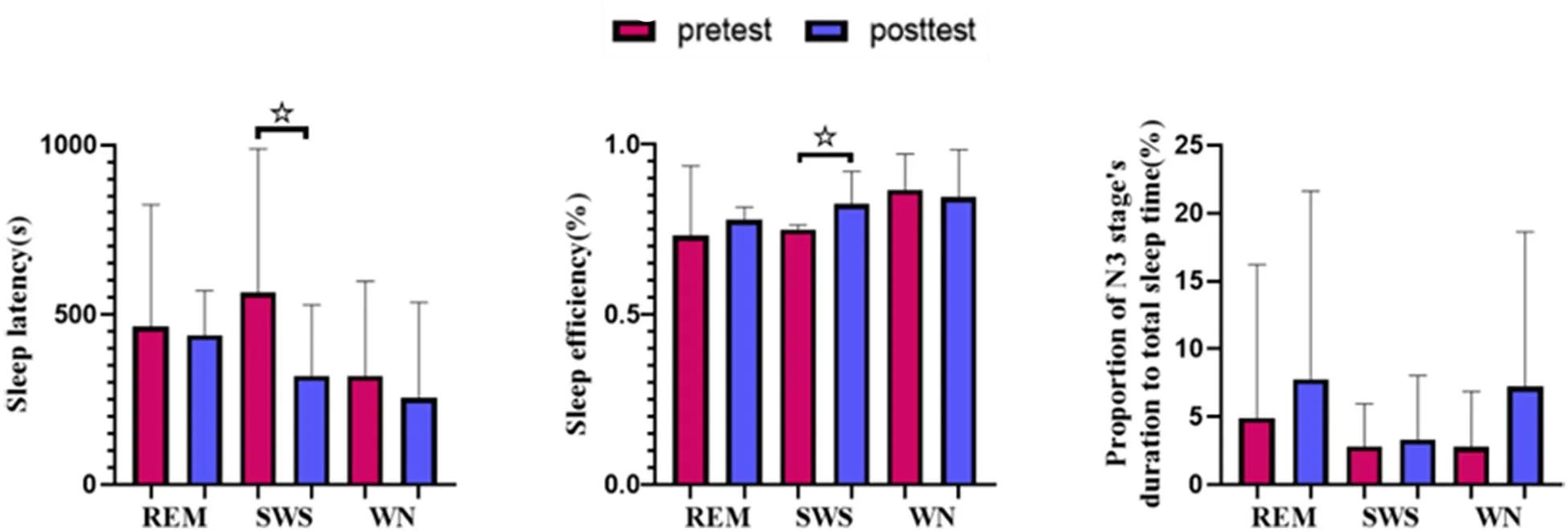
How I Use It & Why I Keep It
This one’s been part of my sleep routine for years — but not in the way most people imagine.
I don’t fall asleep to music or sound. I use it before sleep — once I’m already in bed, winding down with a book or journaling. It’s become a simple cue that shifts my brain into quiet mode.
The type of sound I use isn’t brown or pink noise — it’s often slower and deeper.
Think binaural beats with a low-frequency hum, sometimes layered with soft ambient textures or deep gong-like tones (like what you’d hear in a meditative yoga track). It’s slow, low, and immersive.
And while there’s no magic in the specific tracks, there’s something about these frequencies that reliably helps me feel calmer, groggier, and more grounded — especially when I’ve had a mentally overstimulating day.
I’ve kept it in my protocol all these years because... it just works. I feel better in it — and better after it.
What Changed & Why It's High-Leverage
There’s a noticeable difference in how fast I settle.
My heart rate slows quicker. I fall asleep sooner. I rarely notice a racing mind or get tempted to check my phone. It’s not a game-changer on its own, but as a pre-sleep cue layered into my wind-down stack, it’s been surprisingly powerful.
It’s also more pleasant than many “relaxation techniques.” There’s no effort. No breath pacing. No trying. Just sound, environment, and presence.
But it’s one of those things that, once you find the right track, you tend to stick with.