
The #1 Melatonin Question I Get Every Week: “Why Doesn’t It Help Me Sleep?” (Short Answer: Mistiming It by Hours)
What I teach clients about melatonin timing (it's not 30-60 minutes before bed)


Have you ever taken melatonin, waited an hour, and found yourself still wide awake—maybe even more wired than before?
You're not alone.
This exact scenario plays out in my inbox weekly. People buy the supplement, follow the label directions, and wonder why they're lying in bed frustrated instead of drifting off to sleep.
The problem isn't the melatonin.
It's the timing.
Why Most People Get Melatonin Completely Wrong
Here's what most people don't realize: melatonin works by shifting your internal clock, not by inducing sedation like a sleep medication.
Think of it as a time signal rather than a knockout drop.
Your body produces melatonin naturally when darkness hits, typically starting 2-3 hours before your usual bedtime. However, this timing varies dramatically between individuals—sometimes by as much as 5 hours.
When you take melatonin at the wrong time, you're essentially telling your body clock to prepare for sleep when it's not ready.
This creates internal conflict rather than harmony, which explains why you might feel restless or even more alert.
What Actually Works: My Approach to Melatonin Timing
Melatonin only helps specific groups of people.
It's most effective for those with circadian misalignment—people dealing with delayed sleep phase, jet lag, or night-shift work.
However, even in these cases, the effect is subtle, not dramatic.
For healthy adults with normal sleep rhythms, melatonin won't deepen your sleep or help you stay asleep longer. It may help you fall asleep easier, but only if you're genuinely low on natural melatonin production and only if the timing aligns with your individual circadian rhythm.
I also use it strategically with clients who want to advance their sleep schedule temporarily—shifting bedtime earlier for travel or schedule changes, or individuals who have actually measured low in melatonin production.
My 21-day melatonin sleep recovery blueprint
If you are already using melatonin but still getting unpredictable results—some nights it helps, others it does not—it is easy to end up increasing the dose, switching brands, and spending more without a better outcome. Over time, that pattern delivers the worst combination: inconsistent sleep, ongoing expense, and higher risk of morning grogginess and impaired glucose handling.
The 21-Day Melatonin Sleep Recovery Blueprint + Decision Matrix is designed to end that uncertainty—without requiring lab testing. In 21 days, you follow a structured sequence to:
determine whether melatonin is actually relevant to your sleep pattern or was never the right lever in the first place
adjust timing and dose in a physiologically aligned way, so you are not relying on guesswork or chronic high doses
At the end of the 21 days, you have enough data to make a clear decision: continue with an optimized melatonin plan, or stop investing in a supplement that is not meaningfully improving your sleep.
You can get the 21-Day Melatonin Sleep Recovery Blueprint + Decision Matrix as a one-time option without a paid subscription, you can do so here:
The Science Behind Individual Timing
Your melatonin profile—is as individual as your fingerprint.
Research shows that peak melatonin production can vary by several hours between people, even those with similar sleep schedules.
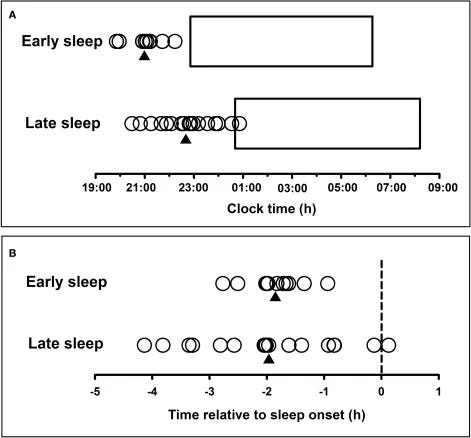
This explains why the standard advice of "take it 30-60 minutes before bed" fails for most people.
You might need to take it 3-4 hours before your desired bedtime, or perhaps just 1 hour before. Without knowing your specific timing, you're essentially guessing.
The most precise method involves a melatonin profile test using saliva or urine samples collected throughout one day. This reveals your individual diurnal melatonin pattern—when it rises and falls throughout your 24-hour cycle.
Alternatively, there's a systematic approach I teach inside the Vault SLEEP OS that helps determine your timing without lab testing over 3-5 days. It requires more effort than guessing, but once you understand your rhythm, you can use that information for future melatonin use, travel, or jet lag recovery.
What This Means for Your Sleep
If you've tried melatonin before and dismissed it as ineffective, the timing might have been the issue. Taking it too close to bedtime—or worse, after your natural melatonin production has already peaked—can actually work against your sleep goals.
Therefore, before reaching for melatonin, consider whether you truly need it. Many sleep issues stem from sleep hygiene, light exposure, or stress management rather than melatonin deficiency.
However, if you fall into one of the groups that can benefit from melatonin, understanding your individual timing transforms it from a random supplement into a precise circadian tool.
What should you do if you’re using melatonin—or thinking about it?
Melatonin isn’t inherently harmful.
But its effects are not one-size-fits-all—and that’s the problem.
Most people don’t know if melatonin is helping or hurting their sleep.
Even fewer know how to time it based on their biology.
And almost no one is calculating when to take melatonin—some people need it 1 hour before bed, others respond best 3 to 4 hours earlier, depending on their circadian phase
If you’d like to go deeper, my 21-day melatonin sleep recovery blueprint
—built around the 5 personalized adjustments I used to help clients with their sleep—is available in the Vault Insiders Exclusive library (paid resource), or if you’d like to access the 21-Day Melatonin Sleep Recovery Blueprint + Decision Matrix as a one-time option without a paid subscription, you can do so here:
If you’ve ever wondered:
“Why do I feel groggy after melatonin?”
or “Why does it sometimes work… and sometimes not?”
This is where you’ll find answers that match your physiology—not someone else’s.
Warmly,
—Kat
P.S. If melatonin isn’t your primary sleep issue:
If you’ve read this far and feel your sleep challenges fall outside melatonin’s role, you can continue with the resources that address other patterns of disrupted sleep.
👉 Explore other root-cause systems that affect sleep →

References
Reiter, R.J.; Sharma, R.; Chuffa, L.G.d.A.; Simko, F.; Dominguez-Rodriguez, A. Mitochondrial Melatonin: Beneficial Effects in Protecting against Heart Failure. Life 2024, 14, 88. https://doi.org/10.3390/life14010088
Sletten TL, Vincenzi S, Redman JR, Lockley SW, Rajaratnam SM. Timing of sleep and its relationship with the endogenous melatonin rhythm. Front Neurol. 2010 Nov 1;1:137. doi: 10.3389/fneur.2010.00137. PMID: 21188265; PMCID: PMC3008942.
Baskett JJ, Broad JB, Wood PC, Duncan JR, Pledger MJ, English J, Arendt J. Does melatonin improve sleep in older people? A randomised crossover trial. Age Ageing. 2003 Mar;32(2):164-70. doi: 10.1093/ageing/32.2.164. PMID: 12615559.
Buscemi N, Vandermeer B, Pandya R, Hooton N, Tjosvold L, Hartling L, Baker G, Vohra S, Klassen T. Melatonin for Treatment of Sleep Disorders. Evidence Report/Technology Assessment No. 108. (Prepared by the University of Alberta Evidence-based Practice Center, under Contract No. 290-02-0023.) AHRQ Publication No. 05-E002-2. Rockville, MD: Agency for Healthcare Research and Quality. November 2004.
Marupuru S, Arku D, Campbell AM, Slack MK, Lee JK. Use of Melatonin and/on Ramelteon for the Treatment of Insomnia in Older Adults: A Systematic Review and Meta-Analysis. J Clin Med. 2022 Aug 31;11(17):5138. doi: 10.3390/jcm11175138. PMID: 36079069; PMCID: PMC9456584.
Ferracioli-Oda E, Qawasmi A, Bloch MH. Meta-analysis: melatonin for the treatment of primary sleep disorders. PLoS One. 2013 May 17;8(5):e63773. doi: 10.1371/journal.pone.0063773. PMID: 23691095; PMCID: PMC3656905.
Fu, K. (2025, June 6). The 3 forms of sleep disruption that shrink your brain—and how to tell if your sleep is actually protecting you from cortical atrophy, brain shrinkage and neurodegeneration. The Longevity Vault. https://thelongevityvault.com/performance-longevity/brain-shrinkage-sleep/
Fu, K. (2025, June 12). Melatonin for sleep: Why it often fails—and what to do instead to stay asleep to prevent brain aging, cognitive decline, and toxin buildup at night. The Longevity Vault. https://thelongevityvault.com/performance-longevity/melatonin-for-sleep/